Wedding florists: recipes and final numbers
Why a florist's margin is decided at final numbers, how to price by the piece, and how to keep the wholesale order honest when the guest count moves.
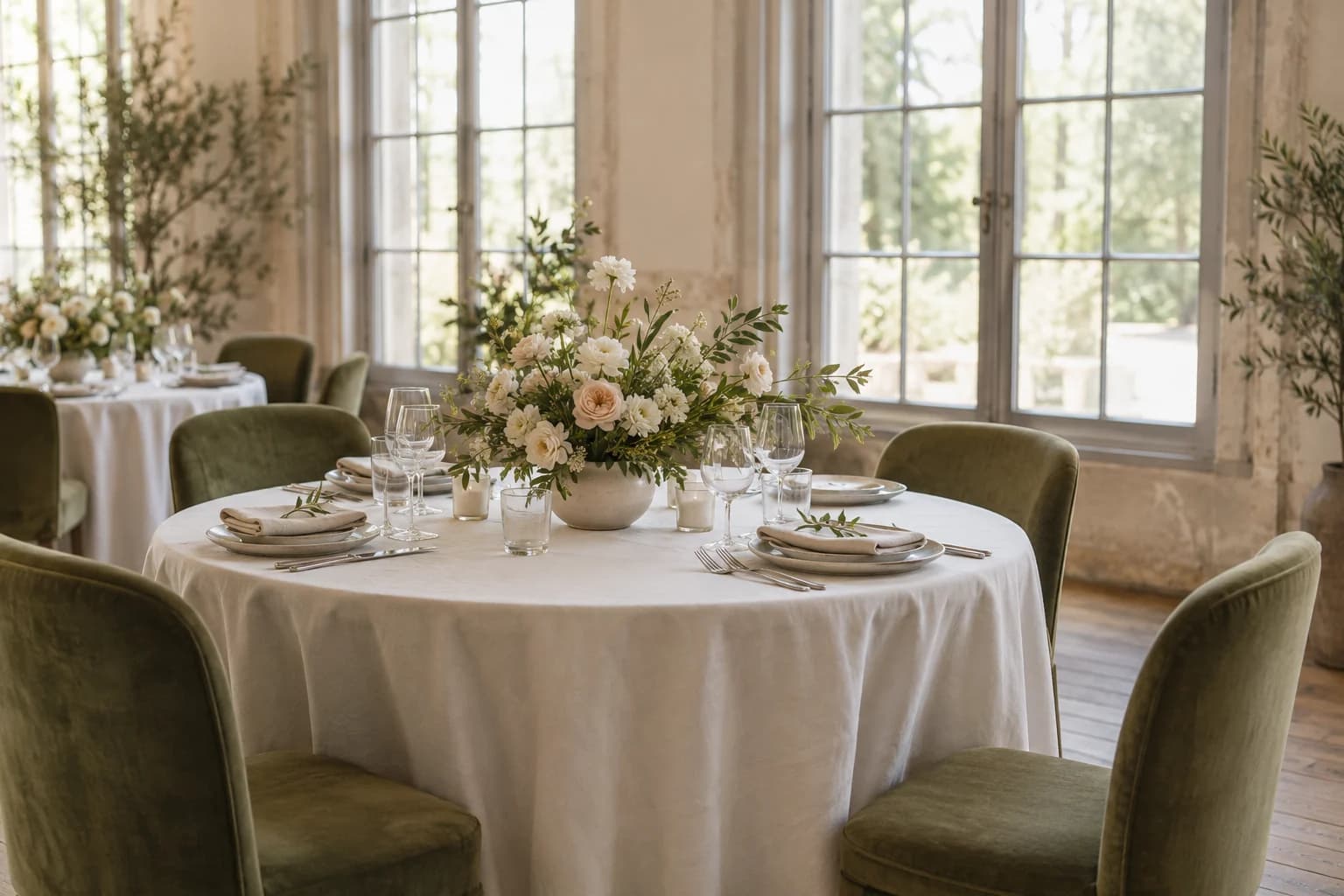
A wedding florist rarely loses money on the design. The money goes at final numbers, when the guest count moves, the table count moves with it, and the stem order, the labor and the price all have to follow by hand from a spreadsheet that was last right in the spring.
TL;DR: Price by the piece, keep a recipe for every piece, and tie the table count to the guest count so final numbers are one edit. Ask for final numbers in writing by a date your contract names, order with a set allowance for breakage, and price install and strike as their own lines.
Why price by the piece and not by the "look"?
Because the couple can see a piece and cannot see a look. A proposal that lists the bridal bouquet, eight bridesmaid bouquets, twelve boutonnieres, the ceremony arch and fifteen centerpieces, each with a price, is a proposal the couple can adjust without a phone call. They drop two boutonnieres; the total changes; nobody argues about what "the garden look" included. Optional upgrades, like a second arch or candles on every table, belong on the proposal as pieces the couple can tick.
What is a recipe, and why keep one for every piece?
A recipe is the stems in one piece: five garden roses, three ranunculus, two stems of eucalyptus. It is the only way to know what a piece costs you, and the only way to build a wholesale order that is right. A centerpiece without a recipe is a guess; fifteen of them is fifteen guesses.
Keep the recipe with the piece, not in a notebook. When the couple swaps peonies for garden roses in August, you change one recipe and every piece that uses it is costed again.
Why does the guest count matter so much?
Because most of your volume is per table. At 120 guests and ten to a table you are making twelve centerpieces; at 150 you are making fifteen. That is three more centerpieces, every stem in them, and the labor to make them. If the table count is a number you typed in March, final numbers in September is a fresh calculation with every chance of a mistake.
Tie it instead: guests, then guests per table, then the per-table pieces multiply. The guest count becomes the one number you update.
How much extra should you order?
Set an allowance for breakage and stems that open badly, and apply it to the whole order rather than piece by piece. Ten percent is a common starting point; you know your wholesaler and your flowers better than any rule. What matters is that the allowance is the same every time, so your cost per wedding is comparable.
When should final numbers be due?
Late enough that the couple knows, early enough that you can order. Two to three weeks before the wedding works for most florists, and your contract should name the date and say what happens to pieces added after it. Ask for final numbers with a short form, not an email thread: guests, tables, and the count of each personal piece. Their answers should land where the order is built.
Why price install and strike separately?
Because they are separate work. Install is a crew, a vehicle and a time window set by the venue; strike is often late at night and sometimes the next morning. A florist who folds both into the floral price has no way to charge for a venue that only allows access two hours before the ceremony, or a strike at midnight. List them as their own lines, and ask for the venue's access times, load-in and who strikes, in writing, before you quote.
What about rentals: vases, arches, stands?
Write them into a rentals addendum: what is lent, what is charged if it is not returned, and when it is collected. A missing set of twelve cylinder vases is a cost you can recover only if the couple agreed to it before the wedding.
How Booksui handles this
Booksui's florist pipeline runs from consultation and design proposal through design and sourcing, final numbers, install day and strike. Each piece on the job carries its recipe and price; set the guests and the table size, and the tables, the wholesale order with your breakage allowance, your cost and the price are counted again whenever the guest count changes. The final-numbers phase sends the couple a pieces-and-counts questionnaire, the install and strike questionnaire asks the venue questions in advance, and a floral agreement with a rentals addendum is there to start from. See floral recipes and orders, or the page for wedding florists. Plans and limits are on the pricing page.
Do this in Booksui
Final numbers are one edit, not a spreadsheet
Each piece with its stems and price; change the guest count and the tables, the wholesale order, your cost and the price are counted again.
How floral recipes and orders works →Keep reading
Related dispatches.
Oct 28, 2026
Bridal hair and makeup: contract and ready-by time
What a hair and makeup artist writes into a wedding contract so the morning runs: the party, the ready-by time, the trial, travel and a second artist.
Oct 28, 2026
Lighting and AV: a quote that survives the site visit
What a lighting and AV company puts in a wedding quote so the number holds after the site visit: power, rigging, crew hours, load-in and venue rules.
Oct 28, 2026
Event rentals: contract, waiver and delivery window
What a rental company writes into a wedding contract so delivery, pickup, counts and damage are settled before the truck leaves: windows, access, waiver.